
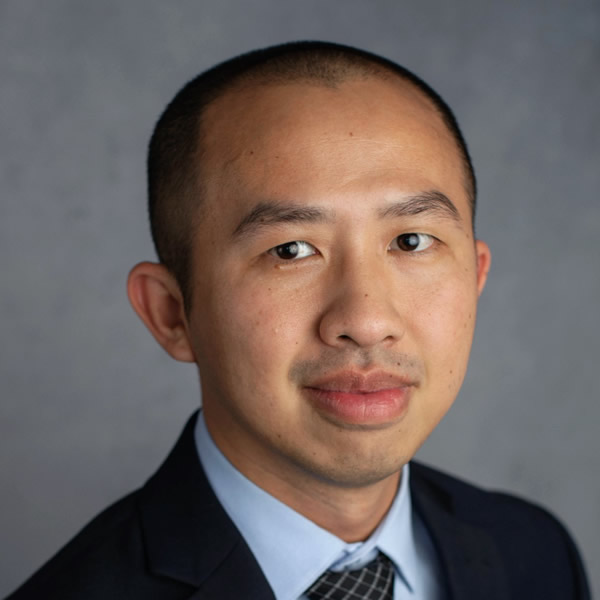
 Major: Cell Biology and Neuroscience
Why did you choose Cell Biology and Neuroscience as your major?
When I entered college, my goal was to do research and develop a cure for HIV. After talking to many advisors, I decided to major in Molecular Biology and Biochemistry. It was not until I started taking Dr. Carr-Schmid’s Fundamental of Cell Biology in the fall of my junior year, that I developed an interest in Cell Biology and decided to switch my major from MBB to CBN at the end of my junior year. Fortunately, due to the overlap between MBB and CBN, I did not have to spend an extra semester to complete the required courses and was able to graduate on time.
What did you like most about it?
I found cellular signaling fascinating. It was captivating for me to think about how cells, though tiny, are the basic building blocks of life. Basic life functions are encoded in the cells’ signaling mechanisms and diseases are the results of dysfunction in cellular signaling mechanisms. I thought those aspects of Cell Biology were extremely important in finding cure for HIV. Additionally, I just want to add that my professor, Dr. Anne Carr-Schmid, was amazing. She made difficult topics easy to understand.
What is your current position, what do you, and what do you enjoy most about it?
I recently graduated from medical school and will be starting residency in Internal Medicine in a month. I believe Internal Medicine is a specialty in which I can combine my knowledge in basic science, pharmacology, pathology, and medicine to care for patients. I am looking forward to my intern year because I will start putting together what I learned in medical school to take care of my patients.
What was your first job after Rutgers and how did you get it?
As a first-generation college student, I was in the EOF program. Being a participant in the program, I attended the summer prep courses in Writing and Math prior to my freshman year. I still remember during one of the math final review sessions, we did not have enough tutors to help the students. So, I volunteered to help, though I was nervous because my English was not that great. Somehow, my action caught the attention of the coordinator who then offered me a job with Student Support Services. Knowing that my first year at Rutgers would be a whole new experience for me, I told the coordinator that I would like to focus on my studying first and would speak with them in the future about the job opportunity when I felt more comfortable with my academic performance. I signed up for work study, I started working as a physics lab assistant, which I enjoyed but felt like it was not for me in the first semester of my freshman year. I knew I wanted to teach and share my knowledge with others. So, I decided to talk to the SSS coordinator and started tutoring math and basic sciences for EOF and ODASIS students until I graduated.
 How did you move from that first job to your current position?
I served as a tutor because I enjoyed teaching and sharing my knowledge with others. I did not think much about how that job could help me with my future career. While in college, I never thought about going to medical school and becoming a doctor. My goal was to be a research scientist to find cure for HIV. With the help of Dr. Khan from ODASIS, I got my first research position in Dr. Monica Driscoll’s lab where I studied the roles of exercise in healthy aging in the worm model, C. elegans. My work in Dr. Driscoll’s lab helped me secure a postbaccalaureate fellowship at the National Institute in Aging. It was at the NIA that I began to ask how I could do more with scientific knowledge like I did as a tutor. So, I began exploring career possibilities in medicine such as nurse, P.A., and doctor. During the day, I worked in the lab. At night, I volunteered in the hospital talking to patients, shadowing doctors and nurses. I realized I enjoyed helping patients and being a doctor would enable to use my knowledge to do just that. That was how I knew medicine was the right path. For me, the decision to pursue medicine was not only about exploring the unknown and possibilities, but also questioning my own decision.
Looking back, what classes or experiences at Rutgers would you point to as contributing to your successes?
This is a tough question because I enjoyed all of my undergraduate classes equally, including writing classes. However, I believe Cell Biology and Endocrinology were the two courses that contributed to my successes. I like the complexity of cell signaling and hormonal regulations because those difficult concepts make me think. And critical thinking and reasoning are what help me succeed on the MCAT and as a medical student.
 What advice do you have for our current Arts and Sciences students?
I understand that entering college is a major milestone for a lot of us, especially those from disadvantage backgrounds. Some start college knowing exactly what they will be doing while some have no clue at all. And that is okay, because college is where we explore possibilities. And this exploration phase continues after graduation.
Try not to get succumbed to the idea that you have to follow any particular path to be successful. As you grow, your experiences and perspectives will change and grow. So, learn to reflect on those experiences and perspectives. Being able to reflect on your experiences will help you define your own career path and success.
I don’t have any specific formula for you to follow because each person will create their own formula. But what you can do now as a college student is to listen to what your advisors/parents/friends/professors have to say and don’t over-analyze their advice/suggestions/recommendations, embrace every opportunity available/offered to you. Last but not least, dare to question your own decision.
Class of 2014, Bachelor of Arts in Cell Biology and Neuroscience
Class of 2022, Master of Business and Science